
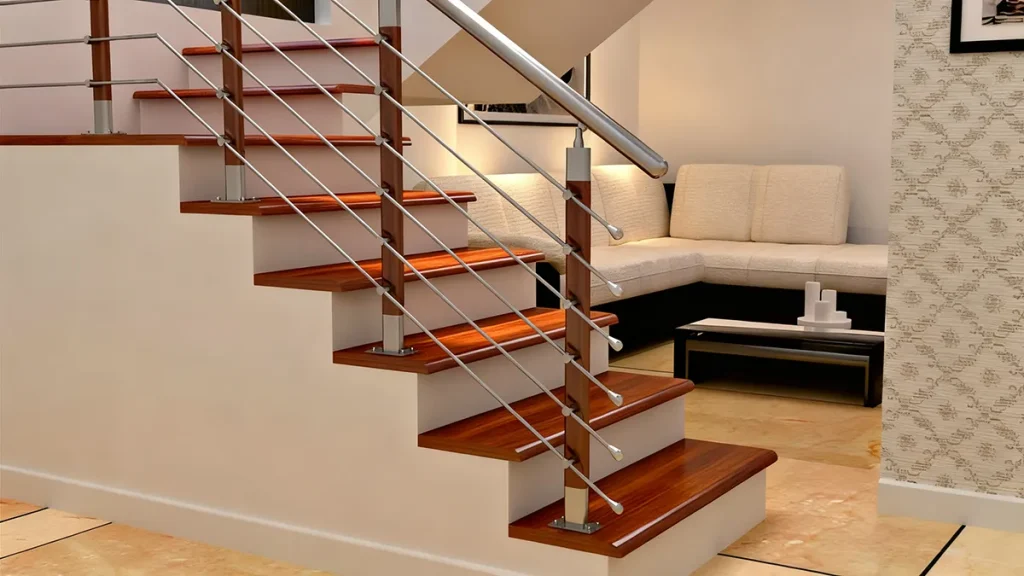

Home renovations have a way of revealing which decisions matter most — and staircases sit firmly at the top of that list. A staircase is one of the first things guests see, one of the last things you stop noticing, and one of the most structurally critical elements in any multi-storey home. Yet many homeowners still treat it as an afterthought, leaving the decision to the final weeks of a build. The result? Costly compromises, compliance headaches, and a feature that should have been a showstopper ending up underwhelming.
Whether you’re building a new home, undertaking a major renovation, or finishing an owner-builder project, finding the right custom stair specialist early makes a measurable difference to your outcome. Here’s what to look for — and what to ask before you commit.
Why Custom Matters More Than You Think
Off-the-shelf stair systems exist, and they serve a purpose. But once you move beyond a basic box-tread run in a standard configuration, you’re in custom territory — and that’s where most Australian residential builds sit today.
Contemporary architecture favours open plans, double-height voids, and statement staircases that double as interior design features. Floating stairs, curved handrails, glass panel balustrades, and steel spine structures are all increasingly common requests. None of these can be handled with a catalogue item. They require design capability, engineering input, material expertise, and a fabrication process that accounts for the specific geometry of your home.
The difference between a generalist builder tackling a complex staircase and a dedicated specialist is significant. Specialists carry the relevant experience across AS/NZS compliance requirements, load engineering, and material behaviour over time. That expertise shows in the finish — and in the longevity of the result.
Five Questions to Ask Any Stair Specialist
1. Can you handle design and fabrication in-house?
End-to-end capability matters. When design, fabrication, and installation are handled by the same team, there’s no finger-pointing if something doesn’t fit or align on site. Ask whether they have their own fabrication facility or whether they outsource production. In-house fabrication typically means tighter tolerances, faster turnaround, and cleaner accountability.
2. What compliance documentation do you provide?
AS/NZS 1657 and the National Construction Code govern stair and balustrade design in Australia. Any reputable staircase installation provider should be able to supply engineering certification, compliance documentation, and drawings in a format your certifier or council will accept. If they can’t provide this upfront, keep looking.
3. Do you work with owner-builders and individual homeowners?
Some specialists focus exclusively on volume builders and developers. Others service the full range — from large-scale residential projects down to single-home renovations and owner-builder installations. If you’re working outside a building company structure, confirm they have experience supporting independent clients through the process, including site measure, drawing approvals, and install co-ordination.
4. What’s included in the quote?
Stair quotes have a habit of expanding. Make sure yours itemises everything: design development, engineering if required, supply, delivery, installation, and any hardware or finishing elements. Ask specifically about handrailing for stairs and balustrade components — these are often quoted separately and can significantly affect the final cost if left unspecified.
5. Can I see your previous work?
A reputable specialist will have a portfolio, case studies, or a showroom showcasing completed projects. Photos tell you a lot, but nothing replaces seeing the quality of joinery, the consistency of finishes, and the precision of fit-out in person. If they have a physical showroom, make the time to visit.
What Sets a Specialist Apart from a General Tradesperson
The word “specialist” gets used loosely in the trades. In the context of staircases, it should mean someone whose entire business is built around this product category — not a joiner or builder who occasionally takes on stair work as part of a broader scope.
True specialists carry pattern knowledge that generalists don’t. They know which configurations work in narrow footprints, which materials behave poorly in high-humidity environments, and how to design a void rail or glass panel balustrade installation that looks seamless rather than afterthought. They’ve solved the same problem dozens or hundreds of times across different site conditions, so the variables that trip up a generalist are routine for them.
This depth of experience also affects project timelines. A specialist can give you a more accurate programme because they’ve built it before. Lead times, site measure windows, council submission timelines — they know the sequence, and they manage it.
The Showroom Advantage
One often-overlooked step in selecting a custom stair specialist is visiting a physical showroom before making any decisions. Samples, renders, and photos only go so far. Standing beside a completed staircase — feeling the handrail, observing the tread depth, looking through a glass panel balustrade at different angles — gives you information no digital presentation can replicate.
Showrooms also allow you to have a proper conversation with someone who knows the product. You can raise concerns, test different material combinations, and get honest advice about what will and won’t work in your space. For a purchase of this scale, that conversation is worth the trip.
Final Thoughts
A staircase is a long-term investment. Get it right and it becomes one of the most talked-about features in your home. Cut corners on the specialist you choose, and it becomes a source of regret — sometimes an expensive one.
The decision comes down to asking the right questions early, verifying credentials and compliance capability, and taking the time to see the work firsthand. The right specialist will welcome scrutiny. They’ve earned it.

Comments are closed.