
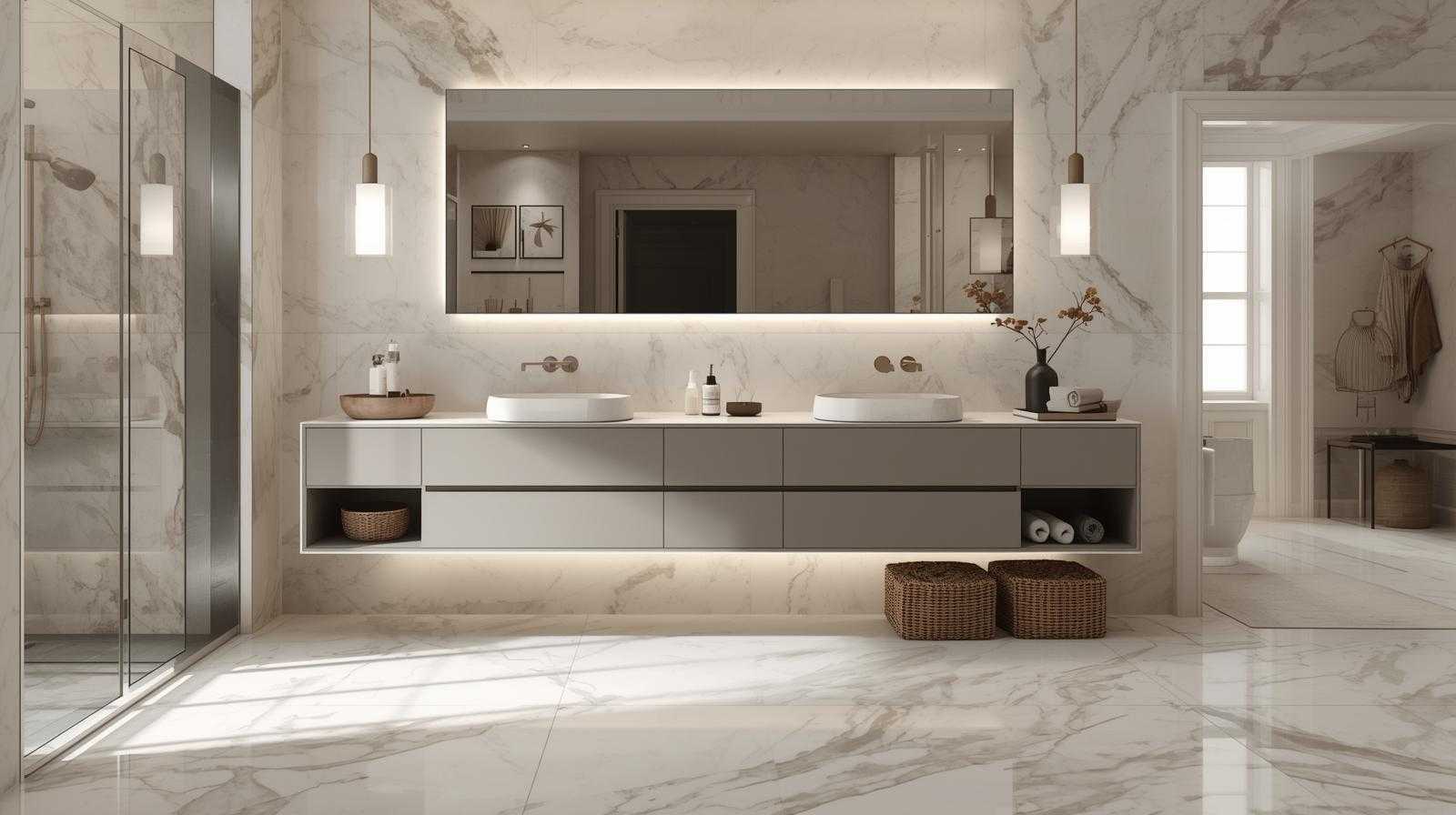

Bathroom design has evolved far beyond basic functionality, transforming personal spaces into high-tech sanctuaries. Among the most innovative advancements in contemporary interior architecture is the incorporation of switchable privacy glass. Traditionally reserved for corporate boardrooms and luxury automotive sunroofs, smart glass is now finding a permanent home in residential spaces, most notably within modern bathroom vanities. This integration bridges the gap between sleek minimalism and high-performance utility, offering homeowners unprecedented control over light, privacy, and spatial perception.
The Core Technology Behind Smart Glass
To understand how smart glass enhances a bathroom vanity, it helps to examine the underlying technology. Most switchable glass utilized in residential applications relies on Polymer Dispersed Liquid Crystal technology. In simple terms, the glass consists of a specialized film laminated between two panes of glass or retrofitted onto existing surfaces.
When the system is powered off, electrical currents are inactive, causing the liquid crystal molecules to scatter randomly. This scattering diffuses light and renders the glass completely opaque, providing instant privacy. When a user flips a switch, taps a wall panel, or uses a voice command, an electrical current aligns the molecules instantly. This alignment allows light to pass straight through, transforming the opaque surface into a crystal-clear mirror or transparent window.
The transition happens in a fraction of a second, creating an almost magical user experience that elevates the daily grooming routine. In bathroom vanities, this technology is frequently applied to mirror doors, medicine cabinet fronts, and even the structural panels surrounding the vanity base.
Benefits of Smart Glass Bathroom Vanities
Incorporating switchable glass into a vanity setup offers several distinct advantages that go beyond mere visual appeal. Modern homeowners continuously seek ways to optimize space, improve energy efficiency, and maintain a clutter-free environment. Smart glass addresses these needs effectively.
-
Dual-Purpose Functionality: A smart glass vanity mirror serves as a traditional high-reflectivity mirror when powered for transparency or specific coating states, but it can shift to reveal hidden storage behind the glass when desired.
-
Maximized Natural Light: In bathrooms where natural light is scarce, smart glass partitions or cabinet doors allow light to permeate the room while retaining privacy when needed.
-
Enhanced Safety and Durability: The lamination process required for smart glass adds an extra layer of structural integrity. If the glass breaks, the interlayer holds the fragments together, reducing the risk of injury in a wet environment.
-
Easy Maintenance: Unlike traditional frosted glass or etched mirrors that can trap oils and fingerprints in textured grooves, smart glass features a smooth, uniform surface that wipes clean effortlessly.
Design Ideas and Integration Strategies
Successfully blending smart glass into a bathroom vanity requires thoughtful planning regarding layout, electrical wiring, and overall interior aesthetic. Because the technology requires a low-voltage power supply, coordination between interior designers, contractors, and electricians is essential during the planning phase.
One popular approach is the smart medicine cabinet. Traditional medicine cabinets often look bulky or dated, forcing a compromise between storage capacity and clean design. By utilizing a continuous sheet of smart glass across the front of a recessed cabinet, the entire vanity wall appears flat and minimalist. When the glass turns clear or activates integrated edge-lighting, access to daily essentials is revealed without disrupting the streamlined look of the room.
Another effective strategy involves integrating smart glass into the sides of floating vanities. Floating vanities create an open, airy feeling in small or medium-sized bathrooms. By incorporating frosted-to-clear smart glass panels beneath the countertop or along the vanity sides, designers can introduce subtle, diffused ambient lighting that emanates from within the furniture piece itself.
Installation and Maintenance Considerations
Installing a smart glass vanity requires adherence to safety codes, particularly because bathrooms feature high moisture levels and direct exposure to water. All electrical connections, transformers, and wiring must be waterproofed and safely housed away from direct water splashes, typically behind the vanity wall or within sealed cabinet compartments.
Homeowners should also consider the power consumption of smart glass. The technology operates on very low voltage, typically requiring minimal electricity, making it efficient for daily use. However, a reliable backup power supply or manual override should be considered in case of electrical outages.
Cleaning requires standard non-abrasive glass cleaners and microfiber cloths. Harsh chemical solvents or abrasive pads should be avoided to protect the conductive coatings and the exterior surface film. Regular wiping prevents soap scum buildup and hard water spots, ensuring the glass transitions smoothly between states for years to come.
Frequently Asked Questions
How does moisture affect smart glass installed in a bathroom?
High-quality smart glass designed for wet environments is fully sealed and laminated to protect the internal liquid crystal layer from steam and water vapor. However, professional installation must ensure that all edge seals are watertight to prevent moisture seepage.
Can smart glass be integrated with smart home automation systems?
Yes, most modern smart glass controllers are compatible with home automation protocols. Homeowners can integrate their vanity mirrors and cabinet glass with voice assistants or smartphone applications to control lighting and opacity remotely.
Does smart glass consume a significant amount of electricity?
Smart glass consumes very little energy. It typically requires power only when changing states or remaining in the clear state. The power draw is comparable to a small LED light bulb, making it an energy-efficient addition to the home.
Can existing bathroom vanities be retrofitted with smart glass?
Retrofitting is possible if there is adequate space to run low-voltage wiring to the mirror or cabinet frame. Many manufacturers offer adhesive smart film that can be applied to existing glass surfaces, though professional installation is strongly recommended for a bubble-free finish.
Is the reflective quality of a smart glass mirror compromised compared to traditional mirrors?
Advanced smart glass utilizes specialized mirror coatings on one side or employs advanced reflective interlayers. While standard switchable glass prioritizes transparency, modern vanity-specific smart glass is engineered to provide a crisp, accurate reflection when in the opaque mode.
What happens to the glass if there is a power failure?
Most residential smart glass systems default to an opaque state when power is lost. This ensures that privacy is maintained even during an unexpected electrical outage, though visibility into storage spaces behind the glass will remain blocked until power is restored.

Comments are closed.