
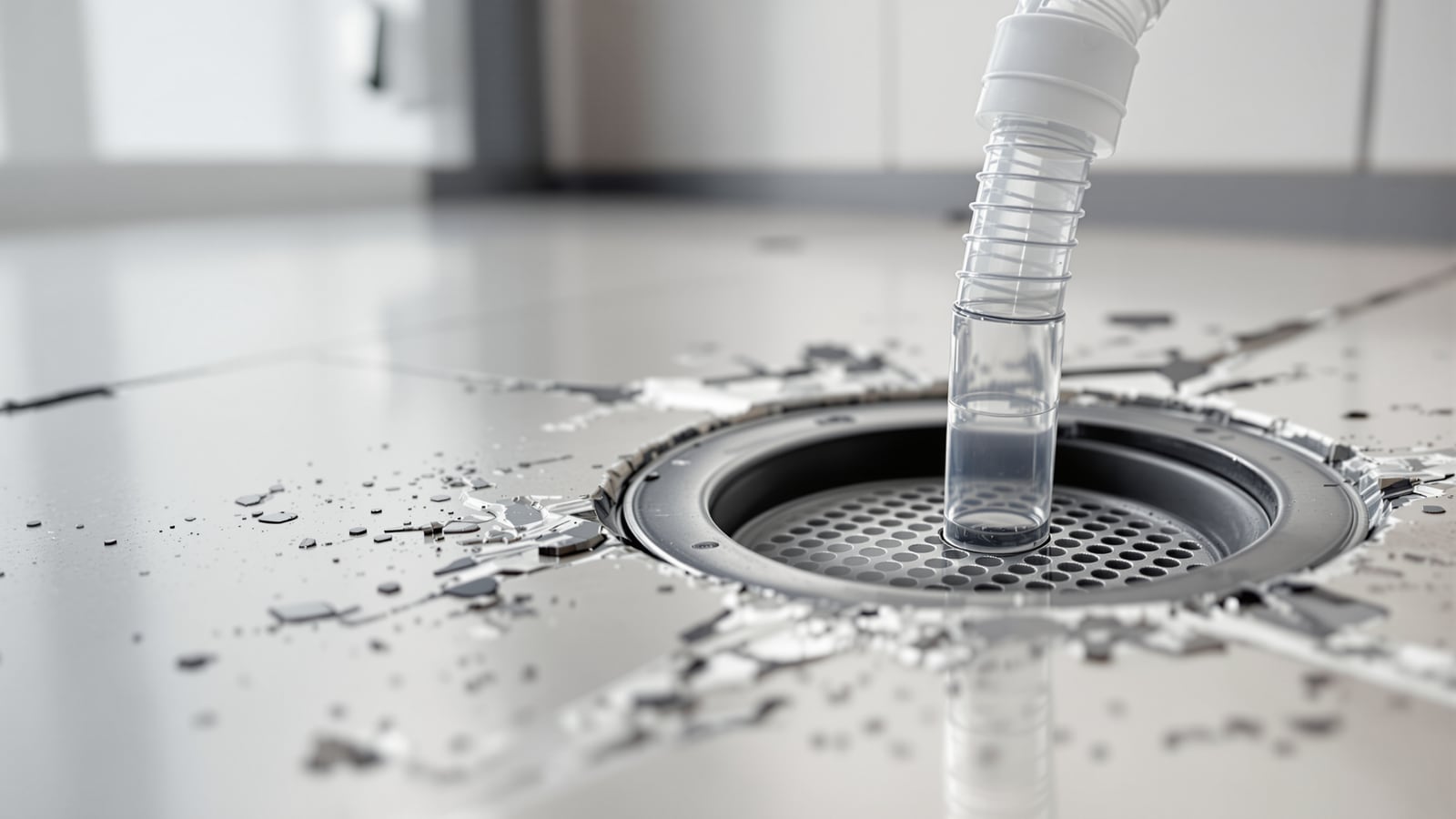

How a Floor Drain’s Water Seal Works
Why Floor Drains Dry Out Faster Than You Expect
Seasonal Heating and Low Indoor Humidity
Warmth From Nearby Mechanical Equipment
Siphoning and Negative Air Pressure
-
Plumbing vent restrictions: If snow, leaves, or a bird’s nest partially blocks the roof vent stack, flushing a toilet or draining a washing machine can create suction in the branch lines, pulling water right out of a nearby floor drain trap.
-
Negative house pressure: Powerful kitchen range hoods, clothes dryers, or exhaust fans running in a tightly sealed home pull makeup air from wherever they can find it—including upward through a partially depleted floor drain trap.
-
Wicking from lint and debris: Hair, dryer lint, pet fur, and dust matted inside the drain grate act like a sponge wick, drawing water upward out of the trap bend and exposing it to moving air.
What Is Actually Inside Sewer Gas
How to Fix a Dry Floor Drain in Minutes
Long-Term Solutions for Seldom-Used Drains
-
Trap primers: A mechanical or electronic trap primer connects to a nearby cold-water line—such as a laundry supply valve or toilet feed—and automatically releases a small burst of water into the floor drain whenever water pressure fluctuates, keeping the trap topped off year-round.
-
Mechanical backwater or trap-seal inserts: One-way rubber or silicone barrier inserts fit snugly inside standard two-inch, three-inch, or four-inch drain throats. They open downward when water flows in and snap shut immediately afterward, blocking both sewer gas evaporation and minor backflow.
-
Routing HVAC or dehumidifier condensate: If your central air conditioner, high-efficiency furnace, or dehumidifier sits nearby, routing its condensate drain line directly to the floor drain provides a steady, automatic trickle of water during active seasons.

Comments are closed.