
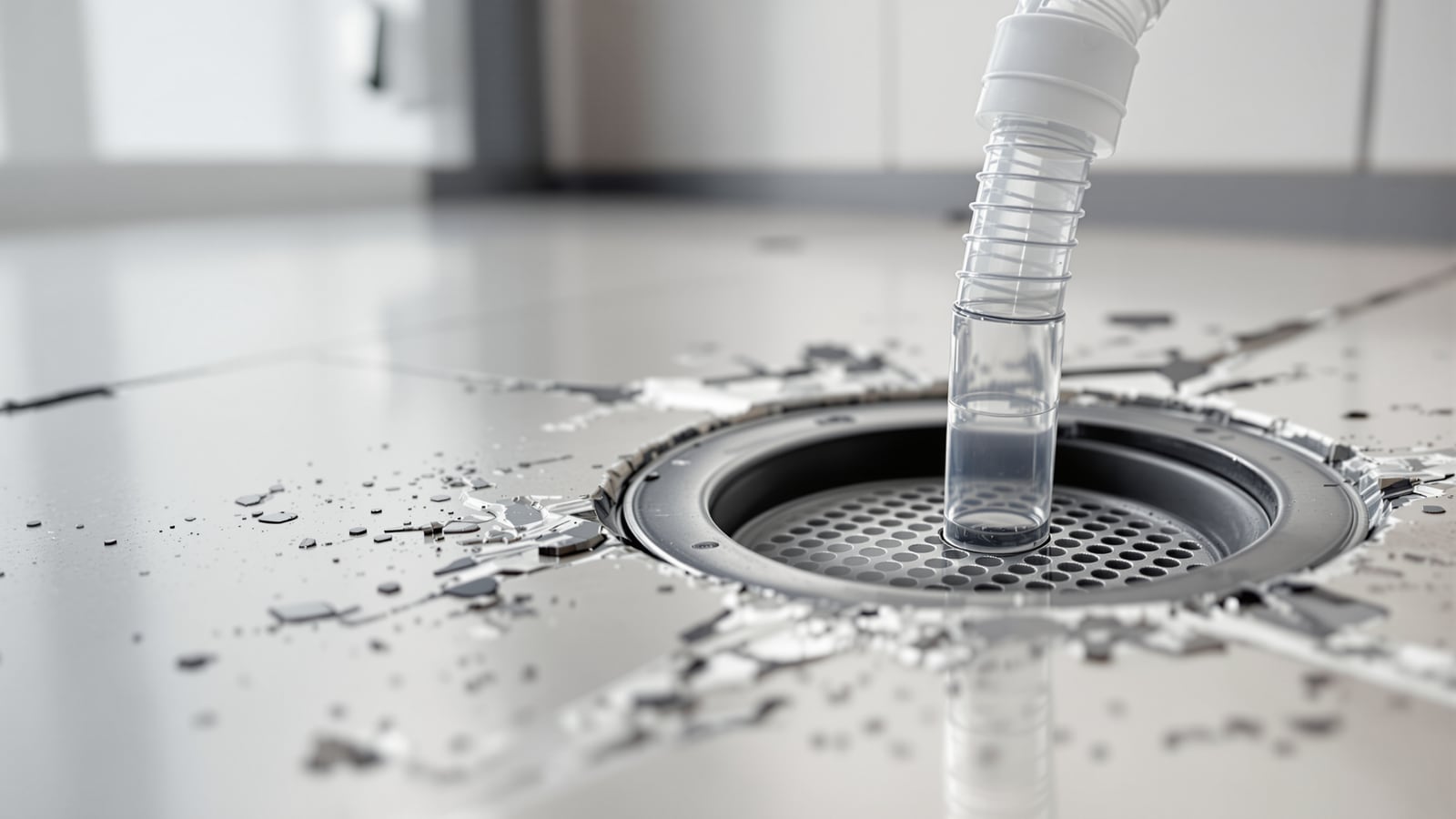
Why Dry Floor Drains Let Sewer Gas Into Basements and Laundry Rooms

Walking downstairs to do a load of laundry only to be hit by a sharp, rotten-egg odor usually makes homeowners suspect a broken pipe, a clogged main line, or a failing septic system. In reality, that unpleasant smell often comes from a floor drain that is doing nothing at all—sitting quietly beneath a furnace, water heater, or washing machine without a drop of water inside it.
Floor drains in basements, utility closets, and laundry rooms exist to catch emergency overflow from appliances, HVAC condensate lines, or minor plumbing leaks. Because most homeowners go months or even years without spilling water across those floors, the hidden water seal inside the drain slowly disappears. Once that barrier vanishes, sewer gases have an unobstructed path straight into your living space.

How a Floor Drain’s Water Seal Works

Every floor drain connected to your home’s sanitary drainage system relies on a U-shaped bend of pipe beneath the concrete slab called a P-trap. That curved section is engineered to hold a standing pool of water—typically two to four inches deep—at all times.
That trapped water acts as a physical plug between the air inside your basement and the air inside your sewer or septic pipes. Liquid wastewater can flow through the trap and continue out toward the municipal sewer or septic tank, while gases rising back up through the main drain line hit that wall of water and stop. Unlike a sink or shower that gets fresh water every day, a floor drain depends entirely on occasional spills, condensation drips, or manual refilling to maintain its water level.

Why Floor Drains Dry Out Faster Than You Expect

Even in a cool basement, standing water exposed to open air evaporates steadily. Several everyday household factors speed up that process and drain the trap well before you notice anything is wrong.

Seasonal Heating and Low Indoor Humidity

During winter, furnaces and forced-air heating systems pull cool air in and circulate warm, dry air throughout the house. Relative humidity in heated basements frequently drops well below 30 percent, accelerating evaporation from open floor grates. Homes with dehumidifiers running continuously in spring and summer experience a similar effect if the unit’s condensate hose does not empty directly into that specific floor drain.

Warmth From Nearby Mechanical Equipment

Floor drains are commonly placed right next to water heaters, boilers, furnaces, or clothes dryers. Radiant heat from those appliances warms the concrete slab and the air directly above the drain grate, turning a quiet utility corner into a warm microclimate where a few cups of trapped water can vanish in just a few weeks.

Siphoning and Negative Air Pressure

Sometimes a floor drain loses its water seal not through slow evaporation, but because of pressure swings inside your plumbing or HVAC system:
  • Plumbing vent restrictions: If snow, leaves, or a bird’s nest partially blocks the roof vent stack, flushing a toilet or draining a washing machine can create suction in the branch lines, pulling water right out of a nearby floor drain trap.

  • Negative house pressure: Powerful kitchen range hoods, clothes dryers, or exhaust fans running in a tightly sealed home pull makeup air from wherever they can find it—including upward through a partially depleted floor drain trap.

  • Wicking from lint and debris: Hair, dryer lint, pet fur, and dust matted inside the drain grate act like a sponge wick, drawing water upward out of the trap bend and exposing it to moving air.

What Is Actually Inside Sewer Gas

Sewer gas is not just an annoyance; it is a mixture of gases produced as organic waste breaks down inside plumbing lines and municipal sewers. The mix typically includes hydrogen sulfide—which creates the unmistakable rotten-egg smell even at very low concentrations—alongside methane, ammonia, carbon dioxide, and trace volatile organic compounds.
At low household levels caused by a dry trap, the most immediate impact is foul odor that drifts up stairwells and through return air ducts into upper floors. Higher or prolonged exposure, however, can irritate eyes and throats, trigger headaches or nausea, and introduce flammable methane gas near pilot lights or electrical switches in mechanical rooms. Treating a sewer odor promptly protects both indoor air quality and household safety.

How to Fix a Dry Floor Drain in Minutes

If you smell sewer gas near a basement or laundry room floor drain, start with the simplest diagnostic test first. Shine a flashlight down through the grate to see whether water is visible a few inches below the floor surface, or listen closely for faint gurgling or airflow rising from the pipe.
Pour two to four quarts of clean water slowly down the drain to refill the P-trap. Within fifteen to thirty minutes—especially after opening a window or running an exhaust fan to clear lingering air—the odor should disappear completely if evaporation was the sole cause.
To slow future evaporation in drains that rarely receive water, add two to three tablespoons of food-grade mineral oil on top of the fresh water. Because mineral oil is lighter than water and does not evaporate easily, it forms a thin floating film across the surface of the trap water that dramatically slows moisture loss. Avoid pouring cooking oils, motor oil, or harsh chemical drain cleaners down floor drains, as vegetable oils turn rancid and clog pipes while caustic chemicals can corrode older cast-iron traps.

Long-Term Solutions for Seldom-Used Drains

Manually refilling floor drains works well if you remember to do it every month or two, yet busy schedules make it easy to forget until the smell returns. Several permanent upgrades eliminate the guesswork:
  • Trap primers: A mechanical or electronic trap primer connects to a nearby cold-water line—such as a laundry supply valve or toilet feed—and automatically releases a small burst of water into the floor drain whenever water pressure fluctuates, keeping the trap topped off year-round.

  • Mechanical backwater or trap-seal inserts: One-way rubber or silicone barrier inserts fit snugly inside standard two-inch, three-inch, or four-inch drain throats. They open downward when water flows in and snap shut immediately afterward, blocking both sewer gas evaporation and minor backflow.

  • Routing HVAC or dehumidifier condensate: If your central air conditioner, high-efficiency furnace, or dehumidifier sits nearby, routing its condensate drain line directly to the floor drain provides a steady, automatic trickle of water during active seasons.

When a Smell Points to a Bigger Plumbing Problem

Refilling a dry P-trap solves the vast majority of basement floor drain odors, yet a persistent smell after adding water deserves closer inspection. If the water drains away immediately without holding a level, the underground trap itself may be cracked, corroded, or improperly vented.
Likewise, if sewage odours accompany slow draining across multiple fixtures, gurgling toilets, or damp discoloration around the base of the drain, a main sewer line blockage or damaged pipe joint beneath the slab may be forcing gases past the water seal. In those situations, having a licensed plumber inspect the line with a drain camera pinpoints the exact fault before hidden water damage develops beneath your floor.

Comments are closed.