
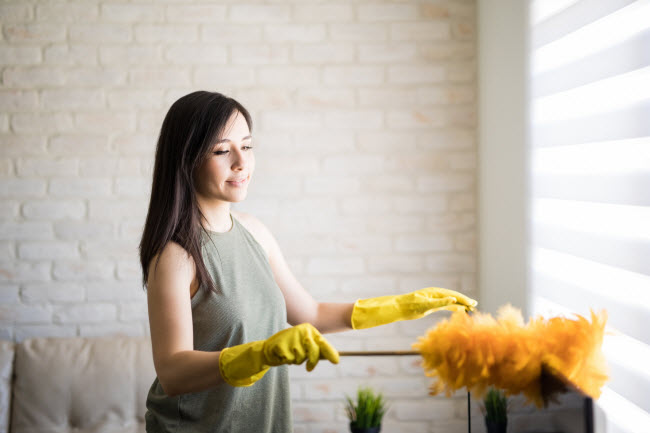

Finishing a home remodel feels like crossing the finish line—until you wipe down a dark coffee table on Monday, vacuum the floors on Tuesday, and walk into the room on Wednesday morning to find the exact same chalky white film coating every surface again. Drywall dust has an almost uncanny way of reappearing days or even weeks after contractors pack up their tools.
That stubborn haze is not a sign that you missed a spot during cleaning. Drywall dust behaves differently from everyday household dirt because its particles are microscopic, feather-light, and electrically charged. Standard vacuums, dry dusters, and rushed wiping methods often redistribute those particles back into the air rather than removing them from the house. Understanding the physics of gypsum dust—and cleaning in the right sequence with proper filtration—breaks the cycle for good.
What Makes Drywall Dust So Hard to Eliminate
Most drywall joint compound and gypsum board sanding produces particles measuring between 1 and 10 microns across—far smaller than a grain of household dust or pet dander. Because those particles carry virtually no weight, even the slightest air current from a ceiling fan, a swinging door, or footsteps walking across a hallway lifts them back into suspension.
Once airborne, ultra-fine drywall dust stays floating for several hours before settling gradually onto flat surfaces. If you vacuum the floor at noon, stir up dust from baseboards or upholstery in the process, and walk away thinking the job is finished, a fresh layer of suspended particles slowly drifts back down onto your clean tables and counters all afternoon.
Drywall dust also clings stubbornly to vertical walls, textured paint, window screens, and cabinet doors through electrostatic attraction. Sweeping a dry cloth across a wall does not trap the powder; it simply knocks those charged particles loose into the air stream where your HVAC system can pick them up and circulate them into untouched rooms.
Five Reasons Drywall Dust Keeps Coming Back
If you have already vacuumed and wiped down surfaces multiple times yet the white residue returns, one or more of these hidden reservoirs is feeding dust back into your living spaces.
1. Your Vacuum Is Blowing Fine Dust Straight Back Out
Standard household uprights, stick vacuums, and shop vacuums fitted with basic pleated paper filters are not built to capture micron-sized gypsum particles. While the vacuum pulls visible debris into the canister or bag, microscopic drywall dust passes right through coarse filter pores and shoots out the exhaust vent at high speed.
Worse still, drywall powder quickly cakes onto standard vacuum filters and clogs motor airflow. Not only does suction drop within minutes, but the exhaust stream actively aerosolizes settled dust across the room while overheating the vacuum motor.
2. Dust Is Trapped Inside Your HVAC Ductwork and Air Handler
If your central heating or air conditioning ran at any point during sanding—or if supply and return vents were left uncovered while contractors worked—fine gypsum powder was drawn directly into the return air ducts. Every time the blower fan cycles on, the system pulls settled dust out of duct joints, filter housings, and evaporator coils and blows a fresh dusting back through every register in the house.
Even a brand-new standard fiberglass furnace filter cannot stop ultra-fine drywall dust from passing into the blower compartment, and a clogged filter restricts airflow across your HVAC system.
3. You Cleaned From the Floor Up Instead of the Ceiling Down
Many homeowners start post-remodel cleanup by vacuuming the floors so they can walk around without tracking white footprints. Unfortunately, cleaning the floor first guarantees you will have to clean it twice.
Light fixtures, ceiling fan blades, recessed can trims, crown molding, door tops, and window blinds all hold invisible layers of settled gypsum powder. Every time you open a door, turn on a light, or bump a curtain rod, dust shakes loose from those elevated perches and settles right back onto freshly vacuumed rugs and hardwood.
4. Soft Surfaces Are Holding Deep Pockets of Powder
Upholstered sofas, throw pillows, curtains, lampshades, mattresses, and area rugs act like giant sponges during a renovation. Even when covered with thin plastic sheeting, air movement draws fine powder beneath loose edges and embeds it deep into fabric weaves.
Sitting down on a couch or closing drapes puffs thousands of trapped particles back into the room air, creating what looks like brand-new dust long after hard surfaces have been scrubbed.
5. Dry Wiping and Sweeping Keep Stirring the Cloud
Using a traditional broom, feather duster, or dry microfiber cloth on drywall residue pushes lightweight powder into the air rather than capturing it. Similarly, mopping a dusty floor with too much water before thorough dry extraction turns gypsum powder into a thin, cloudy slurry that dries back into white streaks once the floor evaporates.
The Right Step-by-Step Order for Post-Renovation Dust Removal
Eliminating drywall dust permanently requires containment, true HEPA filtration, top-to-bottom sequencing, and damp capture—always in that exact order.
Step 1: Isolate the Work Zone and Run Air Scrubbers
Keep plastic zip walls or taped poly sheeting closed over doorways separating the remodeled space from the rest of the home until initial extraction is complete. Place a portable true HEPA air purifier—or a rented commercial HEPA air scrubber—in the center of the room on high speed for 24 to 48 hours so it continuously pulls airborne particles out of circulation while you clean.
Step 2: Vacuum Every Surface With a True HEPA Vacuum
Skip your everyday living room vacuum and use a sealed true HEPA vacuum fitted with a high-efficiency dust bag and a brush attachment. A sealed HEPA system captures 99.97 percent of particles down to 0.3 microns without leaking powder through housing seams or exhaust ports.
Work systematically from the highest point in the room downward:
-
Ceilings and upper fixtures: Vacuum recessed lighting trims, ceiling fan blades, smoke detectors, and upper wall corners first.
-
Walls, trim, and cabinetry: Use a soft-bristle brush attachment to vacuum vertical drywall surfaces, crown molding, window frames, blinds, and the tops and interiors of cabinets.
-
Soft furnishings: Vacuum upholstery cushions, seams, drapes, and rugs slowly in overlapping passes so suction pulls powder out of the fibers.
-
Floors last: Finish by vacuuming hard floors and baseboards thoroughly, paying close attention to expansion gaps and floor register grilles.
Step 3: Damp-Wipe Hard Surfaces With Microfiber Cloths
Once dry HEPA vacuuming has removed loose powder, follow up with slightly damp microfiber cloths to lift the remaining static-bound film. Fold each microfiber cloth into quarters so you have eight clean surfaces, flipping frequently and rinsing in a bucket of clean warm water—or switching to fresh cloths—as soon as white residue appears.
For hard floors, use a flat microfiber mop lightly dampened with clean water or a pH-neutral floor cleaner. Avoid saturating wood or laminate planks, and rinse mop pads often so you are lifting residue rather than spreading a chalky film from room to room.
Step 4: Refresh Your HVAC System and Change Filters
Shut off your HVAC system while vacuuming and wiping, then remove every supply and return register cover to wash them in warm soapy water. Vacuum inside the accessible boot openings with your HEPA hose, and replace your furnace or air handler filter with a fresh MERV 11 to MERV 13 pleated filter—checking it again after two weeks and replacing it a second time if it looks gray or loaded with powder. If heavy sanding occurred with the system running, scheduling professional air duct and blower coil cleaning prevents months of recurring dust circulation.
Knowing When to Wait Before Putting Everything Back
Resist the urge to move books, decorative objects, electronics, and freshly laundered bedding back into a renovated room the very same hour you finish wiping down the baseboards. Give your HEPA air purifier at least 24 hours to clear residual airborne particles, then do one quick final pass over horizontal surfaces and floors with a damp microfiber cloth. Taking that extra day to let the air settle ensures your remodel looks crisp, clean, and truly finished—without a ghost layer of white dust greeting you the next morning.

Comments are closed.